![]()
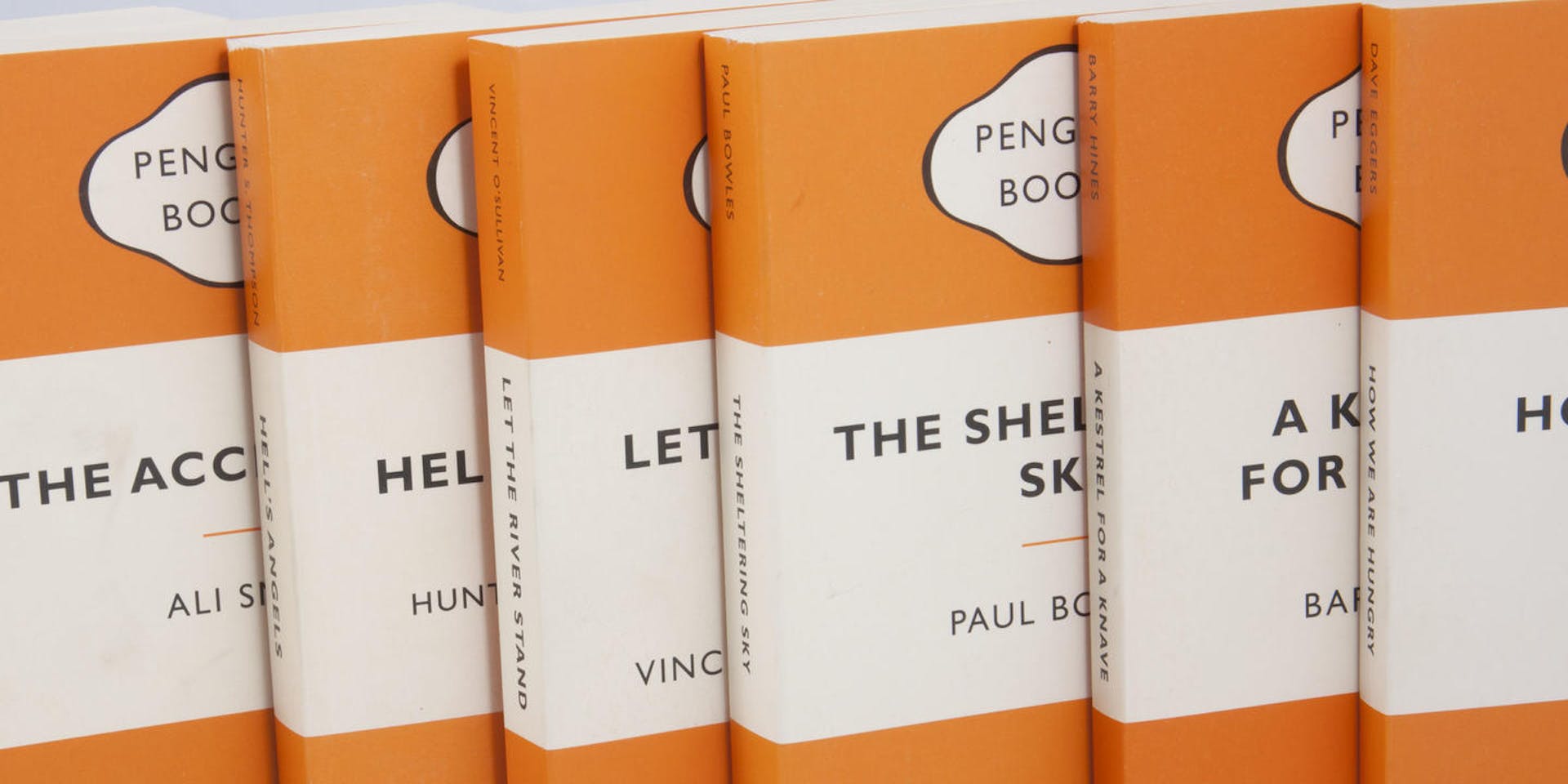
26 New Titles
The Smart family's lacklustre holiday in Norwich is interrupted by a beguiling stranger called Amber. The Smarts try to make sense of their bewildering emotions as Amber tramples over family boundaries and forces them to think in an entirely new way. A novel about how seemingly chance encounters irrevocably transform our understanding of ourselves, The Accidental explores the nature of truth, the role of fate and the power of storytelling.
This masterly story of desire, hatred and violence opens with the unforgettable character of Rufus Scott, a scavenging Harlem jazz musician adrift in New York. Self-destructive, bad and brilliant, he draws us into a Bohemian underworld pulsing with heat, music and sex, where desperate and dangerous characters betray, love and test each other to the limit.
Damon Courtenay died on the morning of April Fool's Day. In this tribute to his son, Bryce Courtenay lays bare the suffering behind this young man's life. Damon's story is one of lifelong struggle, his love for Celeste, the compassion of family, and a fight to the end for integrity.
A testimony to the power of love, April Fool's Day is also about understanding: how when we confront our worst, we can become our best.
Alex-Li Tandem sells autographs. He hunts for them, collects them, sells them, occasionally fakes them – all to give the people what they want – a little piece of Fame. An existential tour around the hollow things of modernity – celebrity, cinema, and the ugly triumph of symbol over experience. Unlike his generation, Alex-Li is on his way to finding enlightenment, otherwise known as some part of himself that cannot be signed, celebrated or sold.
Boy is the story of Roald Dahl's very own boyhood, including tales of sweet-shops and chocolate, mean old ladies and a Great Mouse Plot – the inspiration for some of his most marvellous storybooks in years to come. These tales are full of exciting and strange things – some funny, some frightening; all true.
When Bill Masen awakes blindfolded in hospital and carefully removes his bandages, he realises he is one of the few who can see; almost everyone else has been blinded by a meteor shower. Now, with civilization in chaos, the triffids – huge, venomous, plants able to 'walk', feeding on human flesh – can have their day. This stark vision of a desolate world infested by deadly, monstrous plants has lost none of its power to horrify.
London, 1918. Billy Prior works for Intelligence in the Ministry of Munitions. But his private encounters with women and men, pacifists, objectors and homosexuals conflict with his duties as a soldier, and before long his sense of himself fragments. Forced to consult the man who helped him before – army psychiatrist William Rivers – Prior must confront his inability to be the dutiful soldier his superiors require him to be . . . The second book in the Regeneration series.
Ezekiel Farragut, a college professor and heroin addict, is sent to Falconer Correctional Facility after murdering his brother. Enclosed in a filthy cell, witness to the routine savagery of the guards and his fellow prisoners – murders, conmen and thieves – Farragut believes he is one of the living dead. As he struggles with a troubled marriage and memories of a traumatic childhood, Farragut must learn to survive and remain human amid the relentless brutality of Falconer.
In Kinshasa, Zaire, 1974, Muhammad Ali met George Foreman in the ring. Foreman's famous tactical use of silence, serenity and raw cunning made him the undefeated reigning World Heavyweight Champion. For Ali, the challenger, the contest had to begin in the mind. This legendary fight was to make boxing history with an explosive meeting of indomitable wills, unwavering nerves, and monumental egos.
From London across Europe through India and Asia, this was a trip of discovery made in the mid-seventies, a time before the West had embraced the places, peoples, food, faiths and cultures of the East. To visit the lands of The Great Railway Bazaar is an encounter with all that is truly foreign and exotic.
Marlow, a ferry-boat captain on foreign assignment in the Congo, searches for the legendary and feared Mr. Kurtz, unprepared for what he will find. On his journey he encounters the darkness of the wilderness; the darkness of colonization, and ultimately, the darkness within every man. Heart of Darkness is a powerful indictment of the evils of imperialism.
Philip Marlowe's client, a dried-up husk of a woman, wants him to recover a rare gold coin called a Brasher Doubloon, missing from her late husband's collection. Easy. Probably too easy. Unfortunately, each time the Doubloon pops up, so does a murder. That's unlucky for a private investigator, because leaving a trail of corpses around LA gets cops' noses out of joint. If Marlowe doesn't wrap this one up fast, he's going to end up in jail – or worse, in a box in the ground.
Regarded as little more than a stammering fool, the nobleman Claudius quietly survives the intrigues, bloody purges and mounting cruelty of the imperial Roman dynasties. He watches and records the activities of the wise Augustus and his villainous wife Livia, the sadistic Tiberius and the insane excesses of Caligula. Written in the form of Claudius' autobiography, this is the first part of Robert Graves's brilliant account of the madness and debauchery of ancient Rome.
This is a powerful story of survival in a tough, joyless world. Billy Casper is a troubled teenager growing up in a Yorkshire mining town. Beaten by his drunken brother, ignored by his mother and failing at school, he seems destined for a hard, miserable life down the pits. But Billy discovers a new passion in life when he finds Kes, a kestrel hawk. Billy identifies with her silent strength and she inspires in him the trust and love that nothing else can.
Enter Borges' timeless worlds, where the ideal and the abstract challenge reality; where philosophical paradoxes and endless possibilities abound, and wisps of dream and magic are layered in eternal reoccurrence. To read Labyrinths is to glide through time, space, mythology and philosophy, as Borges' characters struggle towards devastating discovery. His essays and brief tantalizing parables explore the enigmas of time, identity and imagination. Playful and disturbing, scholarly and seductive, his is a haunting and utterly distinctive voice.
These spiritual reflections of Roman emperor Marcus Aurelius (AD 121-180) show a leader trying to make sense of himself and the universe, and cover diverse topics such as the question of virtue, human rationality and the nature of the gods. In developing his personal beliefs, Aurelius created one of the greatest works of philosophy: a series of wise and practical aphorisms that have been consulted by statesmen, thinkers and everyday philosophers for almost two thousand years.
In the Record Department of the sprawling Ministry of Truth, Winston Smith skilfully rewrites the past to appease the needs of the Party. Inwardly, he rebels against the totalitarian world he lives in, which demands absolute obedience and controls him through the watchful eye of Big Brother. In his longing for truth and liberty, Smith begins a secret love affair with Julia. Awakening to new possibilities, Winston begins to question the party. But what is the price of freedom?
Orlando, deciding not to grow old, pursues his quest for passion, adventure, fulfilment and protracted youth. Chasing a dream through the centuries, he bounds from Elizabethan England and imperial Turkey to the modern world. Will he find happiness with the exotic Russian Princess Sasha? Or is the dashing explorer Shelmerdine the ideal man? And what form will Orlando take on the journey – a nobleman; gypsy; writer? Man or . . . woman?
In 1914 Karen Blixen arrived in Kenya with her husband to run a coffee-farm. Drawn to the exquisite beauty of Africa, she spent her happiest years there until the plantation failed. A poignant farewell to her beloved farm, Out of Africa describes her friendships with the local people, her dedication for the landscape and wildlife, and great love for the adventurer Denys Finch-Hatton.
After a mysterious incident during their visit to the Marabar Caves, the charming Dr Aziz is accused of assaulting Adela Quested, a naïve young Englishwoman. His trial exposes the fragile structure of Anglo-Indian relations and the racism inherent in colonialism is exposed. A Passage to India compellingly depicts the fate of individuals caught between the great political and cultural conflicts of the modern world.
When Kino, an Indian pearl-diver, finds 'the Pearl of the world' he believes that his life will be magically transformed. He will marry Juana in church and their little boy, Coyotito, will attend school. Obsessed by his dreams, Kino is blind to the greed, fear and violence the pearl arouses in him and his neighbours. Written with lyrical simplicity The Pearl explores the secretive nature of man, the depths of evil within, and the consequences of rebellion.
As a diplomat in turbulent fifteenth-century Florence, Niccolò Machiavelli (1469-1527) knew how quickly political fortunes could rise and fall. The Prince is his controversial handbook about the dynamics of power, leadership and strategy. Machiavelli's shrewd argument that sometimes it is necessary to abandon ethics to succeed made his name notorious. Consequently, The Prince has been read by strategists, politicians and business people ever since.
In America at the turn of the twentieth century, when society abounds with movers and shakers such as Houdini, J.P Morgan, Henry Ford and Emma Goldman, and the sultry rhythms of ragtime permeate the city, ex-chorus girl Evelyn Nesbitt inspires a mad millionaire to murder architect Stanford White. In this stunning kaleidoscopic chronicle of an age, Doctorow juxtaposes patriotism with fading grandeur, to create a dazzling literary mosaic that depicts an era of dire poverty, fabulous wealth and incredible change.
Sabrina is a firebird blazing through 1950s New York: she is a woman daring to enjoy the sexual licence that men have always known. Weaving a sensual web of deceit as she plays dangerous games of desire, she deliberately avoids commitment, gripped by the pursuit of pleasure for its own sake.
In A Spy in the House of Love, Anais Nin's vision of feminine sexuality is expressed with a ferocious dramatic force.
A Victorian scientist propels himself into the future. Entranced at first by the Eloi, an elfin species descended from man, he soon realizes that this beautiful people are simply remnants of a once-great culture – now weak and childishly afraid of the dark. They have reason to be afraid: in tunnels beneath their paradise lurks another race – the sinister Morlocks. When the scientist's time machine vanishes he must confront the Morlocks or remain forever trapped in the future.
In the years following the First World War a new generation emerges, wistful and vulnerable beneath the glitter. The Bright Young Things of twenties Mayfair, with their paradoxical mix of innocence and sophistication, exercise their hedonistic whims and vile bodies in every kind of capricious escapade. In a quest for treasure, a favourite party occupation, a vivid assortment of characters hunt fast and furiously for ever greater sensations and the fulfilment of unconscious desires.
![]()
Other titles in the series
Wild child Huck has to get away. His violent drunk of a father is back in town again, raising Cain. He won't rest until he has Huck's money. So the enterprising boy fakes his own death and sets out in search of adventure and freedom. Teaming up with Jim, an escaped slave with a price on his head, the two fugitives go on the run, travelling down the wide Mississippi River. But Huck finds himself wrestling with his conscience. Should he save Jim, or turn his friend over to a terrible fate?
Out of his smoke-filled rooms in Baker Street stalks a figure to cause the criminal classes to quake in their boots and rush from their dens of iniquity . . .
The twelve mysteries gathered in this first collection of Sherlock Holmes and Dr Watson's adventures reveal the brilliant consulting detective at the height of his powers. Problems involving a man with a twisted lip, a fabulous blue carbuncle and five orange pips tax Sherlock Holmes's intellect alongside some of his most famous cases.
On the banks of the Mississippi, Tom Sawyer and his friends seek out adventure at every turn. Then one fateful night they witness a murder. The boys swear never to reveal the secret and run away to be pirates and search for hidden treasure. But when Tom gets trapped in a cave with the murderer, can he escape unharmed?
Set in the volatile Paris summer of 1938, The Age of Reason follows two days in the life of Mathieu Delarue, a philosophy teacher, and his circle in the cafes and bars of Montparnasse. Mathieu has so far managed to contain sex and personal freedom in conveniently separate compartments. But now he is in trouble, urgently trying to raise 4,000 francs to procure a safe abortion for his mistress, Marcelle. Beyond all this, filtering an uneasy light on his predicament, rises the distant threat of the coming of the Second World War.
On an ordinary summer's afternoon, Alice tumbles down a hole and an extraordinary adventure begins. In a strange world with even stranger characters, she meets a grinning cat and a rabbit with a pocket-watch, joins a mad tea-party and plays croquet with the Queen! Lost in this fantasy land, Alice finds herself growing more and more curious by the minute . . .
Outcast and mute, Euchrid Eucrow of Ukulore inhabits a nightmarish Southern valley of preachers, incest and ignorance. When the God-fearing folk of the town declare a foundling child to be chosen by the Almighty, Euchrid is disturbed. He sees her very differently, and his conviction, and increasing isolation and insanity, may have terrible consequences for them both . . .
Compelling and astonishing, Nick Cave's acclaimed first novel is a fantastic journey into a world of Gothic tragedy.
One ill-fated evening at the Reform Club, Phileas Fogg rashly bets his companions 20,000 pounds that he can travel around the entire globe in just eighty days – and he is determined not to lose. Travelling by train, steamship, sailing boat, sledge and even elephant, the reserved Englishman and his manservant must overcome storms, kidnappings, natural disasters, Sioux attacks and the dogged Inspector Fix of Scotland Yard – who believes that Fogg has robbed the Bank of England – to win the extraordinary wager. Around the World in Eighty Days gripped audiences on its publication and remains hugely popular, combining exploration, adventure and a thrilling race against time.
Offering ancient wisdom on how to use skill, cunning, tactics and discipline to outwit your opponent, this bestselling 2000-year-old military manual is still worshipped by soldiers on the battlefield and managers in the boardroom as the ultimate guide to winning.
Anthony and Gloria are the essence of Jazz Age glamour. A brilliant and magnetic couple, they fling themselves at life with an energy that is thrilling. New York is a playground where they dance and drink for days on end. Their marriage is a passionate theatrical performance; they are young, rich, alive and lovely and they intend to inherit the earth.
But as money becomes tight, their marriage becomes impossible. And with their inheritance still distant, Anthony and Gloria must grow up and face reality; they may be beautiful but they are also damned.
Beowulf tells the story of the heroic Beowulf and of his battles, first with the monster Grendel, then with Grendel's avenging mother, and finally with a dragon that threatens to devastate his homeland. Through its blend of myth and history, Beowulf vividly evokes a twilight world in which men and supernatural forces live side by side.
Set among the surf and sandhills of the Australian beach – and the tidal changes of three generations of the Lang family – The Bodysurfers is an Australian classic. A short-story collection which has become a bestseller and been adapted for film, television, radio and the theatre, The Bodysurfers on its first publication marked a major change in Australian literature.
Leonard Cohen made his name as a poet before he came to worldwide attention as a singer and songwriter. Book of Longing was twenty years in the making and written in Montreal, Mumbai and during his retreat in Mt Baldy. These poems show the full range of one of the most influential and enigmatic writers of his generation.
Charles Ryder, a lonely student at Oxford, is captivated by the outrageous and decadent Sebastian Flyte. Invited to Brideshead, Sebastian's magnificent family home, Charles welcomes the attentions of its eccentric, aristocratic inhabitants, gradually becoming infatuated with them and the life of privilege they inhabit – in particular, with Sebastian's remote sister, Julia. But he gradually comes to recognize his spiritual and social distance from them, eventually discovering a world where duty and desire, faith and happiness are in conflict.
Life is good for Buck in Santa Clara Valley, where he spends his days eating and sleeping in the golden sunshine. But one day a treacherous act of betrayal leads to his kidnap, and he is forced into a life of toil and danger. Dragged away to be a sledge dog in the harsh and freezing cold Yukon, Buck must fight for his survival. Can he rise above his enemies and become the master of his realm once again?
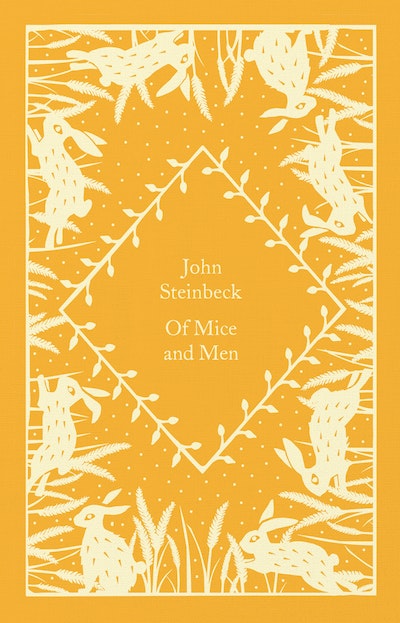
In the din and stink that is Cannery Row a colourful blend of misfits – gamblers, whores, drunks, bums, and artists – survive side by side in a jumble of adventure and mischief. Doc, who owns the laboratory, is the fount of all generosity and wisdom. Everybody wants to do something nice for Doc: the trouble is, he always ends up paying. Packed with invention and joie de vivre, Cannery Row is Steinbeck's high-spirited tribute to his native California.
Dr Felix Hoenikker, has left a deadly legacy to humanity. He is the inventor of ice-nine, a lethal chemical capable of freezing the entire planet. Writer Jonah's search for its whereabouts leads him to Hoenikker's three eccentric children, to an island republic in the Caribbean where the religion of Bokononism is practised, to love and to insanity. Told with deadpan humour and bitter irony, Kurt Vonnegut's cult tale of global destruction is a funny and frightening satire on the end of the world and the madness of mankind.
Barbara Vine's The Chimney Sweeper's Boy is one of the finest, most accomplished and chilling tales of psychological suspense ever written. When a sudden heart attack kills author Gerald Candless, his adoring daughter Sarah embarks on a memoir of her beloved father. But Sarah's investigations turn up someone very different from the man she had known - proof that he wasn't Gerald Candless at all. The Chimney Sweeper's Boy is a troubling tale of taboo, family guilt and personal identity.
Dickens's story of solitary miser Ebenezer Scrooge, who is taught the true meaning of Christmas by a series of ghostly visitors, has proved one of his most well-loved works. Ever since it was published in 1843 it has had an enduring influence on the way we think about the traditions of Christmas.
As David and Rosalind grow older it becomes more difficult to conceal the differences which would label them as mutants from the village elders. Soon they face a choice: wait for eventual discovery, or flee to the terrifying and mutable Badlands . . .
The Chrysalids is a post-nuclear apocalypse story of genetic mutation in a devastated world and explores the lengths the intolerant will go to to keep themselves pure.
In his final years, Freud devoted most of his energies to a series of highly ambitious works on the broadest issues of religion and society. Here, he argues that civilized values – and the impossible ideals of Christianity - inevitably distort our natural aggression and impose a terrible burden of guilt.
When sensible, sophisticated Flora Poste is orphaned at nineteen, she decides her only choice is to descend upon relatives in deepest Sussex. At the aptly named Cold Comfort Farm, she meets the doomed Starkadders, an eccentric group of relatives suffering from a wide variety of ailments. But Flora loves nothing better than to organize other people. Armed with common sense and a strong will, she resolves to take each of the family in hand. A hilarious and merciless parody of rural melodramas, Cold Comfort Farm is one of the best-loved comic novels of all time.
The Communist Manifesto changed the face of the twentieth century beyond recognition, inspiring millions to revolution, forming the basis of political systems that still dominate countless lives and continuing to ignite violent debate about class and capitalism today.
Meet Ignatius J. Reilly: flatulent, eloquent and pretty much unemployable . . .
The ordinary folk of New Orleans seem to think he is unhinged as well. Ignatius ignores them as he heaves his vast bulk through the city's fleshpots in a noble crusade against vice, modernity and ignorance. But his momma has a nasty surprise in store for him. Ignatius must get a job. Undaunted, he uses his new-found employment to further his mission – and now he has a pirate costume and a hot-dog cart to do it with . . .
Describing the surreal hallucinations, insomnia and nightmarish visions he experienced while consuming daily large amounts of laudanum, Thomas De Quincey's legendary account of the pleasures and pains of opium forged a link between artistic self-expression and addiction, and paved the way for later generations of literary drug-takers from Baudelaire to Burroughs.
When Benjamin Button's father arrives at hospital he is surprised and ashamed to find his new baby boy is a weathered, aged man, to all appearances no younger than seventy years old. As time goes by, young Benjamin comes to no longer require a cane, his hair ceases to be grey, his limbs become less frail, his wrinkles less deep, but still the world around him fails to come to terms with his oddness, as he ages towards infancy and beyond . . .
In this selection of poems covering the period 1972 to 2002. This beautifully elegant volume excludes the cartoon element, focusing on Leunig's brilliant texts, with all their absurdity, hilarity, poignancy and joyfulness. Michael Leunig pokes fun at human folly and pretentiousness, deplores the idiocy of war, and revels in the redeeming power of love.
Depicting decadence and moral corruption in pre-revolutionary France, Dangerous Liaisons is one of the most scandalous and controversial novels in European literature. Two aristocrats embark on a sophisticated game of seduction and manipulation to bring amusement to their jaded existences. While the Marquise de Merteuil challenges the Vicomte de Valmont to seduce an innocent convent girl, the Vicomte is also occupied with the conquest of a virtuous married woman. As their intrigues become more duplicitous and they find their human pawns responding in ways they could not have predicted, the consequences prove to be more serious, and deadly, than Merteuil and Valmont could have guessed.
Paul Theroux's Dark Star Safari is a journey overland from Cairo to Cape Town. He travels
across bush and desert, down rivers and across lakes, through Egypt, the Sudan, Ethiopia, Kenya, Uganda, Tanzania, Malawi, Mozambique, Zimbabwe and South Africa. Encompassing some of the most beautiful landscapes on Earth - and some of the most dangerous - Dark Star Safari is a powerful love letter to the continent of Africa.
Count Dracula's castle is a hellish world where night is day, pleasure is pain and the blood of the innocent prized above all. Young Jonathan Harker approaches the gloomy gates with no idea what he is about to face . . .
And back in England eerie incidents are unfolding as strange puncture marks appear on a young woman's neck . . . But can Harker's fiancé be saved? And where is the evil Dracula?
In her opulent novel, Eva Luna, Isabel Allende uses exquisite prose to describe the survival of a young Latin American woman whose powers as a storyteller bring her friendship and love, during a time of political unrest in South America.
Born in the back room of the mansion where her mother is a servant, the enchanting Eva Luna defies oppression by telling stories to a series of vibrant characters.
Eight years ago Moose Malloy and cute little redhead Velma were getting married – until someone framed Malloy for armed robbery. Now his stretch is up and he wants Velma back. PI Philip Marlowe meets Malloy one hot day in Hollywood and, out of the generosity of his jaded heart, agrees to help him. Dragged from one smoky bar to another, Marlowe's search for Velma turns up plenty of dangerous gangsters with a nasty habit of shooting first and talking later. And soon what started as a search for a missing person becomes a matter of life and death . . .
For many people watching football is mere entertainment; to some it's more like a ritual; but to others, its highs and lows provide a narrative to life itself. For Nick Hornby's devotion to the game has provided one of the few constants in a life where the meaningful things – like growing up, leaving home and forming relationships– have rarely been as simple or as uncomplicated as his love for Arsenal.
With electrical intensity of language and insight, J.M. Coetzee reinvents the story of Robinson Crusoe – and in so doing, directs our attention to the seduction and tyranny of storytelling itself. The stories we thought we knew acquire depths that are at once treacherous, elegant, and unexpectedly moving.
Scarcely out of print since the early 1870s, For the Term of His Natural Life has provided successive generations with a vivid account of a brutal phase of colonial life. The main focus of this great convict novel is the complex interaction between those in power and those who suffer, made meaningful because of its hero's struggle against his wrongful imprisonment. Elements of romance, incidents of family life and passages of scenic description both relieve and give emphasis to the tragedy that forms its heart.
Victor Frankenstein is obsessed with the secret of resurrecting the dead. But when he makes a new 'man' out of plundered corpses, his hideous creation fills him disgust.
Rejected by all humanity, the creature sets out to destroy Frankenstein and everyone he loves. And as the monster gets ever closer to his maker, hunter becomes prey in a lethal chase that carries them to the very end of the earth.
Henry Handel Richardson's The Getting of Wisdom is the coming-of-age story of a spontaneous heroine who finds herself ensconced in the rigidity of a turn-of-the-century boarding school. The clever and highly imaginative Laura has difficulty fitting in with her wealthy classmates and begins to compromise her ideals in her search for popularity and acceptance.
1918, the closing months of the war. Army psychiatrist William Rivers is increasingly concerned for the men who have been in his care – particularly Billy Prior, who is about to return to combat in France with young poet Wilfred Owen. As Rivers tries to make sense of what, if anything, he has done to help these injured men, Prior and Owen await the final battles in a war that has decimated a generation…
The Ghost Road is the Booker Prize-winning account of the devastating final months of the First World War.
When one long, hot summer, young Leo is staying with a school-friend at Brandham Hall, he beings to act as a messenger between Ted, the farmer, and Marian, the beautiful young woman up at the hall. He becomes drawn deeper and deeper into their dangerous game of deceit and desire, until his role brings him to a shocking and premature revelation. The haunting story of a young boy's awakening into the secrets of the adult world, The Go-Between is also an unforgettable evocation of the boundaries of Edwardian society.
In 1929 Robert Graves went to live abroad permanently, vowing 'never to make England my home again'. This is his superb account of his life from his childhood and desperately unhappy school days, to his time serving as a young officer in the First World War.
Containing memorable encounters with fellow writers and poets, Goodbye to All That, is a classic war document, and also has immense value as one of the most candid self-portraits of an artist ever written.
Gulliver sees life from many different perspectives during the course of his exciting voyages around the world. In Lilliput he is a giant among a race of little people only six inches high; in Brobdingnag he himself seems tiny compared to the giant inhabitants; and in the country of the Houyhnhnms horses rule and the human creatures there have the status of animals.
Arguably William Shakespeare's most influential play, Hamlet portrays a young Prince's dilemma in choosing between moral integrity and the need for revenge following the murder of his father. Dealing with themes of love, death and revenge, Hamlet is a rich and complex tragedy that continues to entertain audiences around the world today.
In this haunting, magical fairy-tale collection, Oscar Wilde beautifully evokes (among others) the Happy Prince who was not so happy after all, the Selfish Giant who learned to love little children and the Star Child who did not love his parents as much as he should. Each of the stories shines with poetry and magic and will be enjoyed by children of every age.
Coketown is dominated by the figure of Mr Thomas Gradgrind, school headmaster and model of Utilitarian success. Feeding both his pupils and his family with facts, he bans fancy and wonder from young adult minds. As a consequence his obedient daughter Louisa marries the loveless businessman and 'bully of humanity' Mr Bounderby, and his son Tom rebels to become embroiled in gambling and robbery.
Filled with the details and wonders of small-town life, Hard Times is a daring novel of ideas - and ultimately, a celebration of love, hope, and the limitless possibilities of the imagination.
Ruth Park's classic novel The Harp in the South is one of Australia's greatest novels. Hugh and Margaret Darcy are raising their family in Sydney amid the brothels, grog shops and run-down boarding houses of Surry Hills, where money is scarce and life is not easy.
Filled with beautifully drawn characters that will make you laugh as much as cry, this Australian classic will take you straight back to the colourful slums of Sydney with convincing depth, careful detail and great heart.
A sinister Countess is driven mad by a dark secret. An innocent woman is made the instrument of retribution. A murdered man's fury reaches beyond the grave.
When Countess Narona marries Agnes Lockwood's fiancé and takes him to live in a rundown Venetian palace, a servant mysteriously vanishes and the husband dies a recluse. But the dead won't rest. When the palace is transformed into a hotel the two women are drawn to its chambers, where a force stronger than death is waiting to wreak its vengeance. . .
In these three unforgettably intense plays, Henrick Ibsen explores the problems of personal and social morality that he perceived in the world around him and, in particular, the complex nature of truth.
The Hell's Angels erupted into 1960s America, paralysing whole towns with fear. Determined to discover the truth behind the terrifying reputation of these marauding biker gangs, Hunter S. Thompson spent a year on the road with the Angels, documenting his hair-raising experiences with Charger Charley, Big Frank, Little Jesus and The Gimp. Hell's Angels was the result: a masterpiece of underground reportage whose free-wheeling, impressionistic style created the legend of Gonzo journalism, and made Thompson's name as the wild man of American writing.
The mid-seventies: at an all-boys Catholic school in Melbourne, Timothy Conigrave falls wildly and sweetly in love with the captain of the football team. So begins a relationship that weathers disapproval, separation and, ultimately death. With honesty and insight Holding the Man explores the highs and lows of any partnership, and the strength of heart both men have to find when they test positive to HIV. This is a book as refreshing and uplifting as it is moving; a funny and sad and celebratory account of growing up gay.
When the services of famed detective Sherlock Holmes are engaged to ensure the safety of Baskerville heir Sir Henry - recently arrived from America - Dr Watson is surprised to find his friend dismissive of the matter. In fact, Watson is dispatched alone to accompany Sir Henry to Baskerville Hall in Devon while Holmes deals with another case.
Yet Watson finds the wild moors are a far cry from the orderly streets of London, and in the cold night a savage and bestial howl may be heard . . .
Fifteen-year-old New Yorker Daisy thinks she knows all about love. Her mother died giving birth to her, and now her dad has sent her away for the summer, to live in the English countryside with cousins she's never even met.
There she'll discover what real love is: something violent, mysterious and wonderful. There her world will be turned upside down and a perfect summer will explode into a million bewildering pieces.
How will Daisy live then?
Lou Connor wants to escape her emotionally crass family and life of poverty, so she travels from Sydney to the USA as an exchange student. But her host-family, the Hardings – who live in a prefabricated mansion in a nameless Chicago suburb – are in suffocating pursuit of a particular form of suburban perfection. From the very beginning, nothing is as it seems.
Dave Eggers has championed the cause of the short story so magnificently that through his own McSweeney's magazine and through its many imitators the form is once again in the ascendant. Yet while celebrating the work of others, Eggers has also proved himself time and again one of the modern masters of the form.
Beat movement icon and visionary poet, Allen Ginsberg broke boundaries with his fearless, pyrotechnic verse. This volume brings together the poems that made his name as a defining figure of the counter-culture. The apocalyptic 'Howl' became the subject of an obscenity trial when it was first published in 1956. Dark, ecstatic and rhapsodic, it shows why Ginsberg was one of the most influential poets of the twentieth century.
I Can Jump Puddles is Alan Marshall's story of his childhood – a happy world in which, despite his crippling poliomyelitis, he plays, climbs, fights, swims, rides and laughs.
His world was the Australian countryside early last century: rough-riders, bushmen, farmers and tellers of tall stories – a world held precious by the young Alan.
Night falls, in a lonely valley called the Sink, four people prepare for a quiet evening. Then in his orchard, Murray Jacob sees a moving shadow. Across the swamp, his neighbour Ronnie watches her lover leave and feels her baby roll inside her. And on the verandah of the Stubbs's house, a small dog is torn screaming from its leash by something unseen. Nothing will ever be the same again.
Describing Dante's descent into Hell midway through his life with Virgil as a guide, Inferno depicts a cruel underworld in which desperate figures are condemned to eternal damnation for committing one or more of seven deadly sins. As he descends through nine concentric circles of increasingly agonising torture, Dante encounters doomed souls including the pagan Aeneas, the liar Odysseus, the suicide Cleopatra, and his own political enemies, damned for their deceit. Led by leering demons, the poet must ultimately journey with Virgil to the deepest level of all. For it is only by encountering Satan, in the heart of Hell, that he can truly understand the tragedy of sin.
High in the Himalayas sits a dilapidated mansion, home to three people, each dreaming of another time. The judge, broken by a world too messy for justice, is haunted by his past. His orphaned granddaughter has fallen in love with her handsome tutor, and the cook's heart is with his son, working far away in a New York restaurant.
Meanwhile, around the house swirl the forces of revolution and change . . .
With his face swaddled in bandages, his eyes hidden behind dark glasses and his hands covered even indoors, Griffin, the new guest at The Coach and Horses, is at first assumed to be a shy accident-victim. But the true reason for his disguise is far more chilling: he has developed a process that has made him invisible, and is locked in a struggle to discover the antidote. Forced from the village, and driven to murder, he seeks the aid of an old friend, Kemp. The horror of his fate has affected his mind, however and when Kemp refuses to help, he resolves to wreak his revenge.
Wresting his family from the easy living of nineteenth-century Sydney, Cornelius Laffey takes them to northern Queensland where thousands of hopefuls are digging for gold in the mud. They confront the horror of Aboriginal dispossession, and Cornelius is sacked for reporting the slaughter. This is an unforgettable tale of the other side of Australia's heritage.
The Serene City beckons, promising Paradise regained for Ruth Cracknell and her husband, Eric, as they set forth on a carefully planned holiday.
What they are seeking is time. Time to think, time to gaze, time for each other. But from the moment the holiday becomes an uncharted journey, their time is measured.
Journey From Venice is confronting yet deeply comforting – an acknowledgement of the miracle that is unconditional love.
Mowgli, the man-cub who is brought up by wolves in the jungles of Central India, is one of the greatest literary myths ever created. As he embarks on a series of thrilling escapades, Mowgli encounters such unforgettable creatures as Bagheera, the graceful black panther, and Shere Khan, the tiger with the blazing eyes. A rich and complex fable of human life, Kipling's enduring classic dazzles the imagination with its astonishing descriptive powers and lively sense of adventure.
'Junk is not, like alcohol or weed, a means to increased enjoyment in life. Junk is not a kick. It is a way of life.'
Burrough's cult classic is a raw, semi-autobiographical account of drug addiction, which outraged America and influenced generations of writers to come. He relates with unflinching realism the highs and lows of dependency: euphoria, hallucinations, ghostly nocturnal wanderings and strange sexual encounters. Junky is a dark, powerful and mesmerizing account of one man's challenge to turn self-destruction into art.
Gordon Comstock loathes dull, middle-class respectability and worship of money. He gives up a 'good job' in advertising to work part-time in a bookshop, giving him more time to write. But he slides instead into a self-induced poverty that destroys his creativity and his spirit. Only Rosemary, ever-faithful Rosemary, has the strength to challenge his commitment to his chosen way of life. Through the character of Gordon Comstock, Orwell reveals his own disaffection with the society he himself once renounced.
A woman has been reported missing to detective Marlowe and a corpse is found in the lake. Yet it is not the body of the missing person, but that of one of her neighbours. Now Marlowe's on the trail of a killer, who leads him out of smoggy LA all the way to a murky mountain lake . . .
Moral allegory and spiritual autobiography, The Little Prince is the most translated book in the French language. With a timeless charm it tells the story of a little boy who leaves the safety of his own tiny planet to travel the universe, learning the vagaries of adult behaviour through a series of extraordinary encounters. His personal odyssey culminates in a voyage to Earth and further adventures.
When Meaulnes first arrives at the local school in Sologne, everyone is captivated by his good looks, daring and charisma. But when Meaulnes disappears for several days, and returns with tales of a strange party at a mysterious house and a beautiful girl hidden within it, he has been changed forever. In his restless search for his Lost Estate and the happiness he found there, Meaulnes, observed by his loyal friend Francois, may risk losing everything he ever had.
'Australia is a lucky country, run mainly by second-rate people who share its luck.'
First published in 1964 The Lucky Country caused a sensation. The book was a wake-up call to an unimaginative nation, an indictment of a country mired in mediocrity and manacled to its past.
Jim Dixon has accidentally fallen into a job at one of Britain's new redbrick universities. A moderately successful future in the History department beckons. As long as Jim can survive a madrigal-singing weekend at Professor Welch's, deliver a lecture on 'Merrie England' and resist Christine, the hopelessly desirable girlfriend of Welch's awful son Bertrand.
Emma Bovary is beautiful and bored, trapped in her marriage to a mediocre doctor and stifled by the banality of provincial life. An ardent reader of sentimental novels, she longs for passion and seeks escape in fantasies of high romance, in voracious spending and, eventually, in adultery. But even her affairs bring her disappointment and the consequences are devastating.
Flaubert's erotically charged novel caused a moral outcry on its publication in 1857.
Can you run away from who you are?
Years ago Michael Henchard committed a terrible act in a fit of drunken rage. Now he has put his past behind him and become a respected member of the town of Casterbridge, but behind his success lies his shameful secret and his self-destructive temper.
As Henchard's deeds gradually catch up with him, he is forced to face up to his true nature – and risks losing everything he has ever had.
In 1941, Rob Coram is six. The war feels far removed from Geraldton in Western Australia. But when his favourite older cousin Rick leaves to join the army, the war takes a step closer.
When Rick returns several years later, he has changed and the old merry-go-round that represents Rob's dream of utopia begins to disintegrate before his eyes.
The Merry-Go-Round in the Sea allows us a precious glimpse into a simpler kind of childhood in a country that no longer exists.
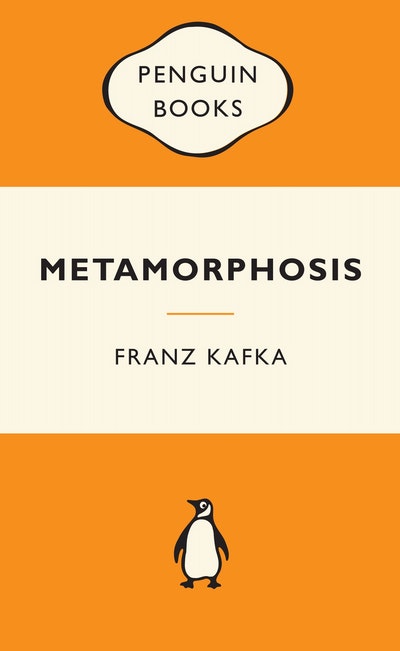
This collection brings together the small proportion of Kafka's works that he thought worthy of publication. It includes Metamorphosis, his most famous work, an exploration of horrific transformation and alienation; Meditation, a collection of his earlier studies; The Judgement, written in a single night of frenzied creativity; The Stoker, the first chapter of a novel set in America and a fascinating occasional piece, The Aeroplanes at Brescia, Kafka's eyewitness account of an air display in 1909. Together, these stories reveal the breadth of Kafka's literary vision and the extraordinary imaginative depth of his thought.
Nora falls in love with Javo the junkie, and together they try to make sense of their lives and the choices they have made. But caught in an increasingly ambiguous relationship, they are unable to let go - and the harder they pull away from each other, the tighter the monkey grip.
Nausea is both the story of the troubled life of a young writer, Antoine Roquentin, and an exposition of one of the most influential and significant philosophical attitudes of modern times – existentialism. The book chronicles his struggle with the realization that he is an entirely free agent in a world devoid of meaning; a world in which he must find his own purpose and then take total responsibility for his choices. A seminal work of contemporary literary philosophy, Nausea evokes and examines the dizzying angst that can come from simply trying to live.
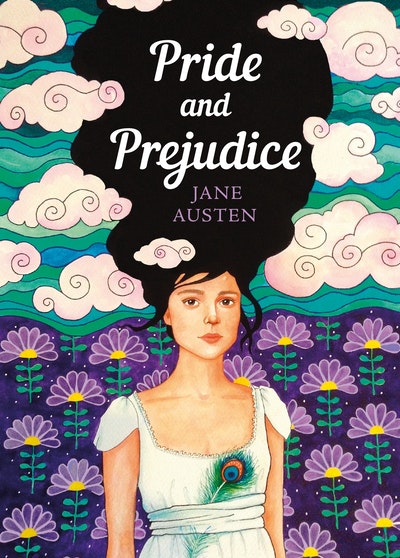
During an eventful season at Bath, young, naive Catherine Morland experiences fashionable society for the first time. She is delighted with her new acquaintances: flirtatious Isabella, who introduces Catherine to the joys of Gothic romances, and sophisticated Henry and Eleanor Tilney, who invite her to their father's house, Northanger Abbey. There, influenced by novels of horror and intrigue, Catherine comes to imagine terrible crimes committed by General Tilney, risking the loss of Henry's affection, and must learn the difference between fiction and reality, false friends and true. With its broad comedy and irrepressible heroine, Northanger Abbey is the most youthful and optimistic of Jane Austen's work.
Alienated from society and paralysed by a sense of his own insignificance, the anonymous narrator of Dostoyevsky's groundbreaking Notes from Underground tells the story of his tortured life. With bitter irony, he describes his refusal to become a worker in the 'anthill' of society and his gradual withdrawal to an existence 'underground'.
In a world struggling back from the brink of apocalypse, life is harsh. But for Elspeth Gordie, born with enhanced mental abilities that would see her sterilised or burned if discovered, it is also dangerous. There is only survival by secrecy, and so she determines never to use her forbidden powers. But it is as if they have their own imperative, and their use inevitably brings her to the attention of the totalitarian Council that rules the Land . . .
The year is 1977, and Adrian is nine. He lives with his gran and his uncle Rory; his best friend is Clinton Tull. He loves to draw and he wants a dog; he's afraid of quicksand and self-combustion. Adrian watches his suburban world, but there is much he cannot understand. He does not, for instance, know why three neighbourhood children might set out to buy ice-cream and never come back home . . .
No one has done more to shape our view of what makes us human than Charles Darwin, whose seismic theory of evolution turned the Victorian world upside down, utterly rewrote our notions of life on earth and is still attacked by religious creationists today.
This brutal glimpse of Russia under Stalin shocked the world when it first appeared.
Discover the importance of a piece of bread or an extra bowl of soup, the incredible luxury of a book, the ingenious possibilities of a nail, a piece of string or a single match in a time where survival is all. Enter a world of incarceration– and participate in the struggle of men to survive both the terrible rigours of nature and the inhumanity of the system that defines their conditions of life.
In the sixteenth century, Zen monks in Japan developed the haiku, an unrhymed poetic form consisting of 17 syllables arranged in three lines. Now, in One Hundred Great Books in Haiku, David Bader has applied this ancient poetic form to the classics. From Homer to Milton to Dostyevsky, the great books are finally within reach of even the shortest attention spans!
Pipes and kettledrums herald the arrival of gypsies on their annual visit to Macondo, the newly founded village where José Arcadio Buendía and his strong-willed wife, Úrsula, have started their new life. As the mysterious Melquíades excites Aureliano Buendía's father with new inventions and tales of adventure, neither can know the significance of the indecipherable manuscript that the old gypsy passes into their hands.
Our Sunshine is the tale of a man whose story outgrew his life. Robert Drewe's strikingly imaginative re-creation of the inner life of Ned Kelly is written with a brilliant clarity and impressionistic economy. It carries the reader into a dreamworld of astonishing and violent revelation, an entrancing and frightening landscape of murder, sexuality, persecution, robbery, vanity, politics, and corruption.
In these haunting reflections, Primo Levi, a chemist by training takes the elements of the periodic table as his inspiration. He ranges from young love to political savagery; 'Iron' honours the mountain-climbing resistance hero who put iron in Levi's student soul, while 'Cerium' recalls the improvised cigarette lighters which saved his life in Auschwitz.
Eight years ago, Anne rejected the man she loved because her friends and family persuaded her that he wasn't rich or important enough. In all that time, she's never found anyone to match Captain Wentworth.
With her snobbish father and spoiled sister always ready to embarrass her in polite society, Anne wonders if she'll ever find the courage to follow her heart again.
And if she does, what can she do to regain the affections of her Captain?
In this autobiography, published in 1975, the private Andy Warhol talks about love, sex, food, beauty, fame, work, money, success; about New York and America; about himself – his childhood in McKeesport, Pennsylvania, good times and bad times in the Big Apple, the explosion of his career in the Sixties, and life among celebrities.
While Joan Lindsay's haunting Australian classic Picnic at Hanging Rock is a work of fiction, the story is often considered one of Australia's greatest mysteries.
In 1900, a class of young women from an exclusive private school go on an excursion to the isolated Hanging Rock, deep in the Australian bush. The excursion ends in tragedy when three girls and a teacher mysteriously vanish after climbing the rock. Only one girl returns, with no memory of what has become of the others . . .
Jonathan Noel, bank security guard, has spent 30 years protecting himself from people and events. But an encounter with a glaring pigeon upsets his ordered life and flings him into a state of fear and insecurity. From the author of the international bestselling Perfume.
Edgar Allan Poe is not only the finest, most terrifying writer of Gothic horror tales ever to have lived, he also wrote extraordinary poems. Here, Poe writes of the torments of ingenious, malevolent persecutors and of a mind's own sickening madness. The Pit and the Pendulum is a collection of works from a dark and brilliant genius.
The townspeople of Oran are in the grip of a deadly plague, which condemns its victims to a horrifying death. Fear, isolation and claustrophobia follow as they are forced into quarantine, each responding in their own way to the lethal bacillus: some resign themselves to fate, some seek blame and a few, like Dr Rieux, resist the terror.
An immediate triumph when it was published in 1947, Camus's novel is a story of bravery and determination against the precariousness of human existence.
The game is called Beatie Bow and the children play it for the thrill of scaring themselves. But when Abigail is drawn in, the game is quickly transformed into an extraordinary, sometimes horrifying, adventure as she finds herself transported to a place that is foreign yet strangely familiar . . .
Over the course of his short life, John Keats (1795-1821) honed a raw talent into a brilliant poetic maturity. This wide-ranging selection of Keats's poetry contains youthful verse, such as his earliest known poem 'Imitation of Spenser'; poems from his celebrated collection of 1820 – including 'Lamia', 'Isabella', 'The Eve of St Agnes', 'Ode to a Nightingale' and 'Hyperion' – and later celebrated works such as 'La Belle Dame sans Merci'.
From one of Australia's most celebrated writers comes eleven stories about the complexities of life and love; of looking back and longing; of what it means to be a stranger, on foreign ground and known, told with the piercing familiarity and resonance we have come to expect from Helen Garner. Remarkably honest, often very funny and always woven in ways that surprise, these stories tease out everyday life to show the darkness underneath – but also the possibilities of joy.
First with your head and then with your heart . . .
To Peekay, a seven-year-old boy who dreams of being the welterweight champion of the world, this is a piece of advice that he will carry with him throughout his life.
Born in a South Africa divided by racism and hatred, this one small boy will come to lead all the tribes of Africa. And in a final conflict with his childhood enemy, the Judge, Peekay will fight to the death for justice.
Bryce Courtenay's classic bestseller is a story of the triumph of the human spirit – a spellbinding tale for all ages.
Romantic, heroic, comic and tragic, unconventional schoolmistress Jean Brodie has become and iconic figure in post-war fiction. Her glamour, freethinking ideas and manipulative charm hold dangerous sway over her girls at the Marcia Blaine Academy – the 'crème de la crème' – who become the Brodie Set, introduced to a world of adult games they will never forget.
First published in the 1920's, The Prophet, Gibran's hugely popular guide to living, has sold millions of copies worldwide and is the most famous work of religious fiction of the twentieth century. The Prophet became the bible of 1960s culture and was credited with founding the New Age movement, yet it still continues to inspire people around the world today.
This volume brings together Freud's main contributions to the psychology of love. His illuminating discussions of the ways in which sexuality is always psychosexuality – that there is no sexuality without fantasy, conscious or unconscious – have changed the ways we think about erotic life. In these papers Freud develops his now famous theories about the sexuality of childhood and the transgressive nature of human desire. In the famous case study of the eighteen-year-old 'Dora', we see Freud at work, both putting into practice and testing his sexual theories that were to change the modern world.
A barbed attack on the British class system, Pygmalion both delighted and scandalized its first audiences in 1914. Henry Higgins is the Pygmalion figure who believes he can transform Eliza Doolittle, a cockney flower girl, into a duchess at ease in polite society. The one thing he overlooks is that his 'creation' has a mind of her own.
Gentleman thief Raffles is daring, debonair, devilishly handsome - and a first-rate cricketer. In these stories, the master burglar mixes his aptitude for cricket with his passion for crime: stealing jewels from a country house, outwitting the law, stealing from the nouveau riche and, of course, bowling like a demon - all with the assistance of his plucky sidekick Bunny.
'Pat Barker's novel is not only a vivid evocation of the agony of the First World War. It is a multi-layered exploration of all wars, challenging assumptions about the relationship between doctors and patients, between the classes, between men and women, and between men and men. A fine anthem for doomed youth.' — Time Out
The sole survivor of a shipwreck, Robinson Crusoe is stranded on an uninhabited island far from any shipping routes. At first he is in despair, but slowly, with patience and ingenuity, he transforms his dismal island into a tropical paradise. But for twenty-four years he has no human company – until one Friday, he rescues a prisoner from a boatload of cannibals.
A Room of One's Own grew out of a lecture that Virginia Woolf had been invited to give at Girton College, Cambridge in 1928. Ranging over Jane Austen and Charlotte Bronte and why neither of them could have written War and Peace, over the silent fate of Shakespeare's gifted (and imaginary) sister, over the effects of poverty and chastity on female creativity, she gives us one of the greatest feminist polemics of the century.
Lord Copper, newspaper magnate and proprietor of the Daily Beast, has always prided himself on his intuitive flair for spotting ace reporters. That is not to say he has not made the odd blunder, however, and may in a moment of weakness make another. Acting on a dinner-party tip form Mrs Algernon Stitch he feels convinced that he has hit on just the chap to cover a promising little war in the African Republic of Ishmaelia. One of Waugh's most exuberant comedies, Scoop is a brilliantly irreverent satire of Fleet Street and its hectic pursuit of hot news.
Donna Tartt's The Secret History is the original American campus novel. When Richard Papen joins an elite group of clever misfits at his New England college, it seems he can finally become the person he wants to be. But the moral boundaries he will cross with his new friends - and the deaths they are responsible for - will change all of their lives forever. The Secret History recounts the terrible price we pay for mistakes made on the dark journey to adulthood.
Judy's father, Captain Woolcot, found his vivacious, cheeky daughter impossible – but seven children were really too much for him and most of the time they ran wild at their rambling riverside home, Misrule.
Step inside and meet them all – dreamy Meg, and Pip, daring Judy, naughty Bunty, Nell, Baby and the youngest, 'the General'. Come and share in their lives, their laughter and their tears.
William Shakespeare's sonnets are a beautiful expression of a range of human emotions – from love to grief, anger, jealousy and lust. Including the instantly recognisable 'Shall I compare thee to a summer's day?' as well as a range of other equally moving works, this compilation brings together the complete collection of all 154 of Shakespeare's sonnets.
The Moresby's are Americans abroad, but some journeys are best left unmade… Struggling to save their marriage, they resolve to trade civilization for the wilderness of the Sahara. At first, the pair are seduced by the deserts beauty. But beneath the exquisite landscape lurk the dark undercurrents of an alien culture, and the relentless dangers of a hostile natural world. And as they travel deeper, they might not only lose their way. They could lose their lives . . .
Everyone has their cross to bear – their swag, their shiralee – and for Macauley, walking across New South Wales in search of work, it is his young daughter who has to suffer his resentment at having her in tow. But then, he discovers that the ties that bind can be as much a comfort as a burden, and what he thought of as his Shiralee could be the one thing that will save him from himself.
This classic Australian novel perfectly captures the spirit of the bush and the tough, resilient people of the outback.
This Faust-like and magical story of the humanization of a middle-aged misanthrope was described in The New York Times as a 'savage indictment of bourgeois society'. But, as the author notes in this edition, Steppenwolf is a book that has been consistently misinterpreted. This self-portrait of a man who felt himself to be half-human and half-wolf can also be seen as a plea for rigorous self-examination and an indictment of intellectual hypocrisy.
Flame-haired Grady McNeil is beautiful, rich and defiant. Her privileged society life leaves her wanting, and excitement comes in the form of the highly unsuitable Clyde, a Brooklyn-born, Jewish parking attendant. When Grady's mother and father leave her alone one summer in their New York penthouse, her secret affair intensifies and she is forced to make decisions that will alter her future indelibly. Truman Capote's recently discovered debut novel is a captivating portrayal of first love.
As life slips away, Gabriel looks back over his brief twenty years that have been clouded by frustration and humiliation. A small town and distant parents ensure that he is never allowed to forget the horrific mistake he made as a child. He has only two friends – his dog Surrender, and the unruly wild boy Finnigan, with whom he made a boyhood pact.
When a series of arson attacks grips the town, Gabriel realises how unpredictable and dangerous Finnegan is. Events begin to spiral out of control, and it becomes clear that only the most extreme of measures will rid Gabriel of Finnegan for good.
Dick and Nicole Diver have turned the French Riviera into the playground of the rich and glamorous. Among their circle is Rosemary Hoyt, the beautiful starlet, who is unaware of the corruption and dark secrets that haunt their marriage. When Dick becomes entangled with Rosemary, he fractures the delicate structure of his relationship with Nicole and the lustre of their life together begins to tarnish.
Tender is the Night reflects not only Fitzgerald's own personal tragedy, but also the shattered idealism of the society in which he lived.
In a dingy apartment on the Passage du Pont-Neuf in Paris, Therese Raquin is trapped in a loveless marriage to her sickly cousin, Camille. The numbing tedium of her life is suddenly shattered when she embarks on a turbulent affair with her husband's earthy friend Laurent, but their animal passion for each other soon compels the lovers to commit a crime that will haunt them forever. Therese Raquin caused a scandal when it appeared in 1867. It is not only an uninhibited portrayal of adultery, madness and revenge, but also a devastating exploration of the darkest aspects of human existence.
Richard Hannay has just returned to England after years in South Africa and is thoroughly bored with his life in London. But then a murder is committed in his flat, just days after a chance encounter with an American who had told him about an assassination plot which could have dire international consequences. An obvious suspect for the police and an easy target for the killers, Hannay goes on the run in his native Scotland where he will need all his courage and ingenuity to stay one step ahead of his pursuers.
Martyrs to hypochondria and general seediness, J. and his friends George and Harris decide that a jaunt up the Thames would suit them to a 'T'. But when they set off, they can hardly predict the troubles that lie ahead with tow-ropes, unreliable weather-forecasts and tins of pineapple chunks – not to mention the devastation left in the wake of J.'s small fox-terrier Montmorency.
In these three tales from the first major translation into English of The Arabian Nights in more than 100 years, the endless inventiveness of the vizier's daughter Shahrazad is revealed, as she spins stories of greed, lust, riches and wonder to delay her death at the hands of a brutal king.
To the Lighthouse is at once a vivid impressionist depiction of a family holiday, and a meditation on a marriage, on parenthood and childhood, on grief, tyranny and bitterness. Its use of stream of consciousness, reminiscence and shifting perspectives, give the novel an intimate, poetic essence, and at the time of publication in 1927 it represented an utter rejection of Victorian and Edwardian literary values.
Originally designed as a story for boys, Stevenson's novel is narrated by the teenage Jim Hawkins, who outwits a gang of murderous pirates led by that unforgettable avatar of amorality, Long John Silver. But Treasure Island has also had great appeal for adult readers and was admired by Mark Twain, Rudyard Kipling, and (reluctantly) Henry James. The story has a dreamlike quality of a fairy tale and has worked its way into the collective imagination of more than five generations of readers, gaining the power of myth.
'Somebody must have laid false information against Josef K., for he was arrested one morning without having done anything wrong.' From this first sentence onwards, Josef K. is on trial for his right to exist in a novel which, more than any other, is infinitely perceptive about the nature of terror and the futility of human life.
The night after a shooting star is seen streaking across the sky, a cylinder is discovered near London. Armed with just a white flag, the locals approach the mysterious object – only to be burned alive by heat-rays as horrific, tentacled invaders emerge.
Soon, the whole of human civilization is under threat, as powerful Martians move across the land in massive killing machines, armed with black gas and burning rays. The aliens are determined to win the Earth for themselves.
When timid and plain Catherine Sloper acquires a dashing and determined suitor, her father, convinced that the young man is nothing more than a fortune-hunter, decides to put a stop to their romance. Torn between her desire to win her father's love and approval and her passion for the first man who has ever declared his love for her, Catherine faces an agonising dilemma, and becomes all too aware of the restrictions that others seek to place on her freedom. James's masterly novel deftly interweaves the public and private faces of nineteenth-century New York society; it is also a deeply moving study of innocence destroyed.
Living in the Blackwood family home with only her sister Constance and her Uncle Julian for company, Merricat just wants to preserve their delicate way of life. But ever since Constance was acquitted of murdering the rest of the family, the world isn't leaving the Blackwoods alone. And when Cousin Charles arrives, armed with overtures of friendship and a desperate need to get into the safe, Merricat must do everything in her power to protect the remaining family.
Driving one night along the deserted track that leads to the farm, Miss Hester Harper and Katherine run into a mysterious creature. They dump the body into the farm's deep well but the voice of the injured intruder will not be stilled and the closer Katherine is drawn to the edge of the well, the farther away she gets from Hester.
A twentieth-century Australian classic, The Well is a haunting and wryly humorous tale of memory, desire and loneliness.
The air of Eastwick breeds witches – women whose powerful longings can stir up thunderstorms and fracture domestic peace. Jane, Alexandra and Sukie, divorced and dangerous, have formed a coven. Into the void of Eastwick breezes Darryl Van Horne, a charismatic magus of a man who entrances the trio. This is Updike at his most mischievous.
Dorothy thinks she's lost forever when a tornado whirls her and her dog, Toto, into a magical world. To get home, she must find the wonderful wizard in the Emerald City of Oz. On the way she meets the Scarecrow, the Tin Woodman, and the Cowardly Lion. But the Wicked Witch of the West has her own plans for the new arrival – will Dorothy ever see Kansas again?
In a house haunted by memories, the past is everywhere . . .
As darkness falls, a man caught in a snowstorm is forced to shelter at the strange, grim house Wuthering Heights. It is a place he will never forget. There he will come to learn the story of Cathy: how she was forced to choose between her well-meaning husband and the dangerous man she had loved since she was young. How her choice led to betrayal and terrible revenge – and continues to torment those in the present.